Education House
Events Articles
Log in
menu
Frontpage Events Articles

Education House Oxford: Accelerating a Shift in Educational Purpose

Article • 11 May 2026

Education House convened leaders across sectors to address a specific objective: identifying methods to accelerate widespread shifts in the purpose of education toward a new paradigm.

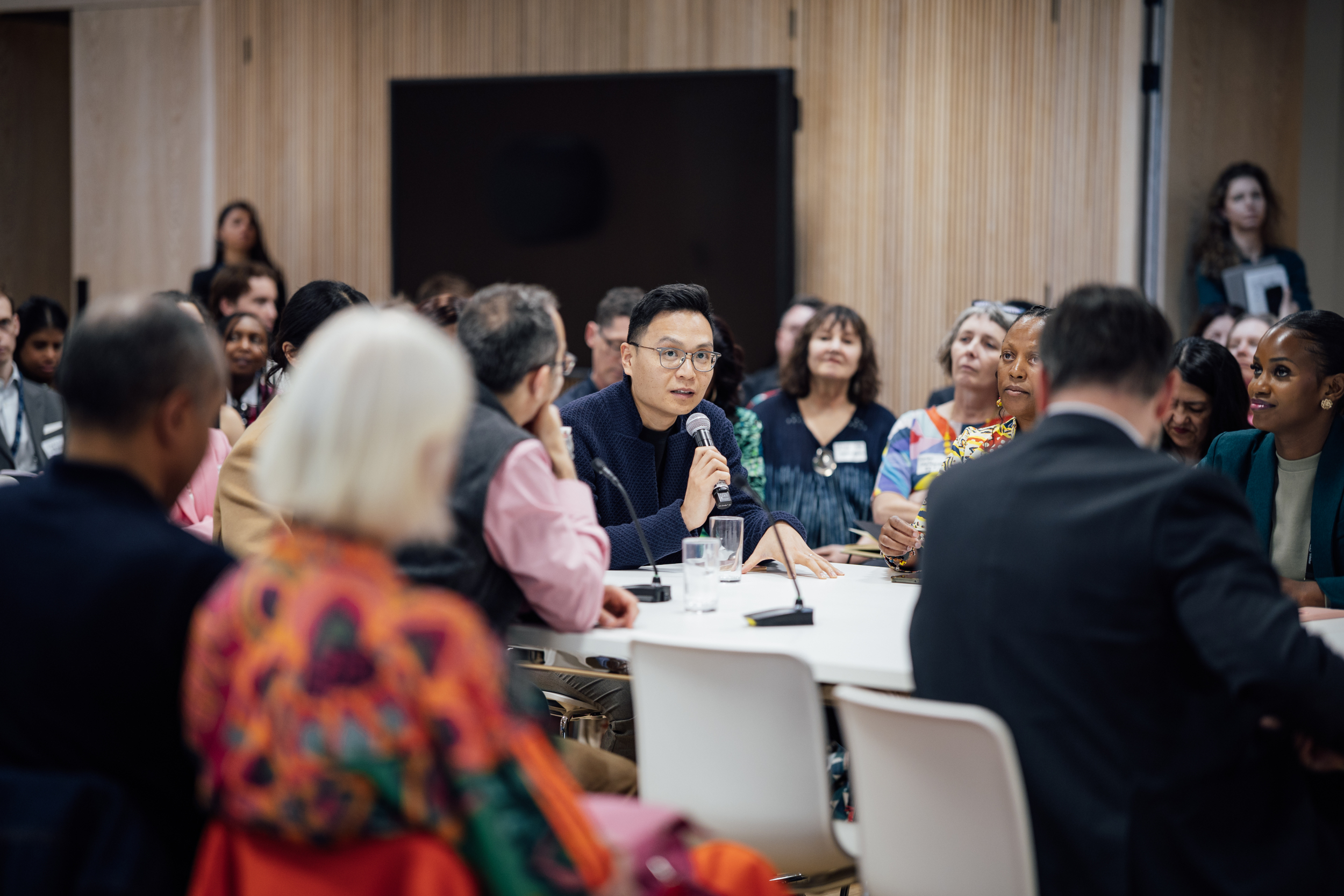
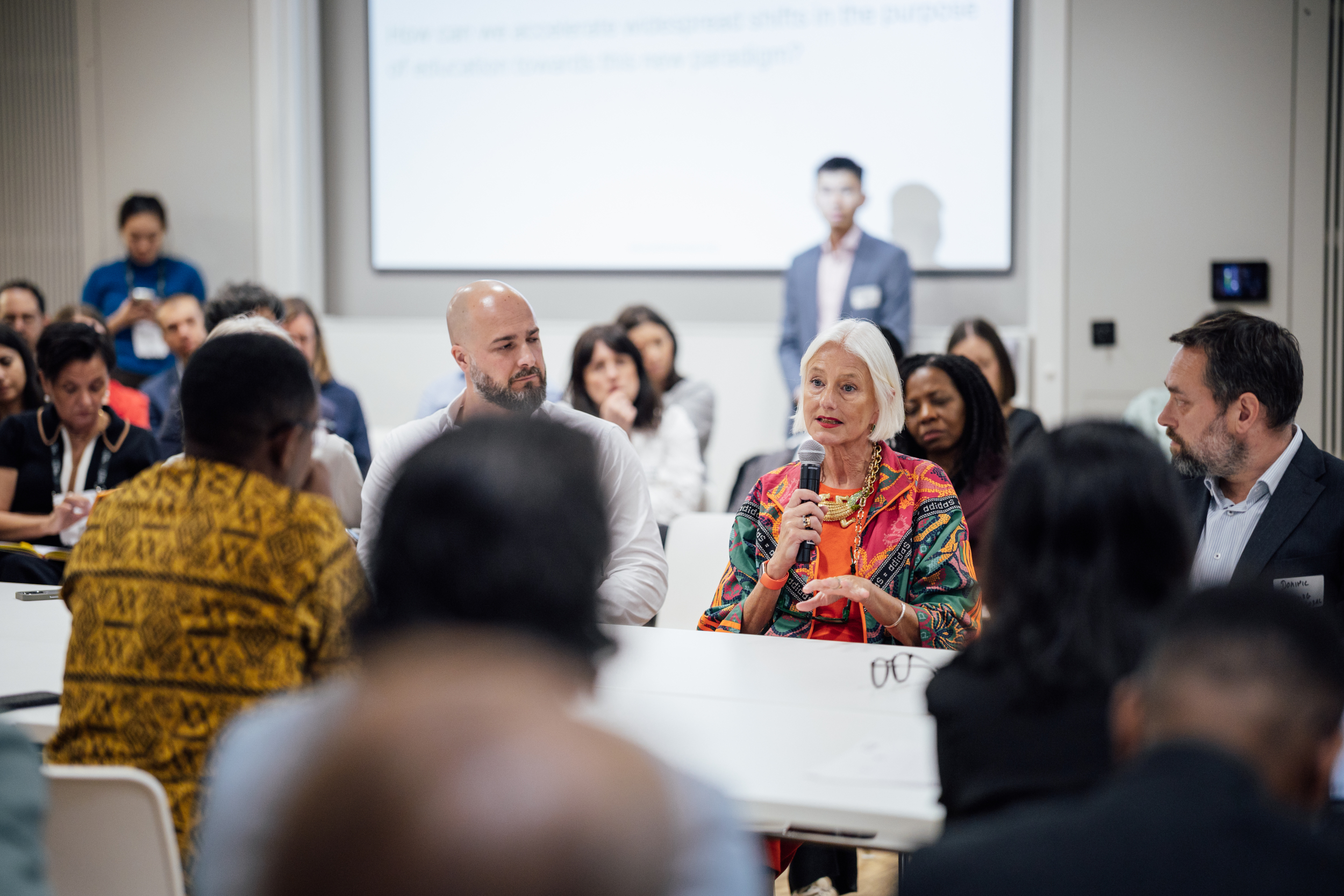
We opened Education House in Oxford with a ‘long table’ session focused on the question how do we accelerate a fundamental shift in the purpose of education?  


It felt like there was strong consensus around the starting assumption -  geopolitical instability, environmental breakdown, polarization, and rising inequality cannot be addressed through incremental reform. There is a fundamental, structural challenge, namely that our education systems were designed for a different world.

So much of the global response to this challenge focuses on managing symptoms rather than confronting root causes. The central thesis for the long table discussion and across the rest of the event was that what happens inside classrooms today shapes global outcomes tomorrow, so not just everyone working in education, but anyone who cares about the future has ‘skin in the game’.


Creating the Conditions for Equal Exchange

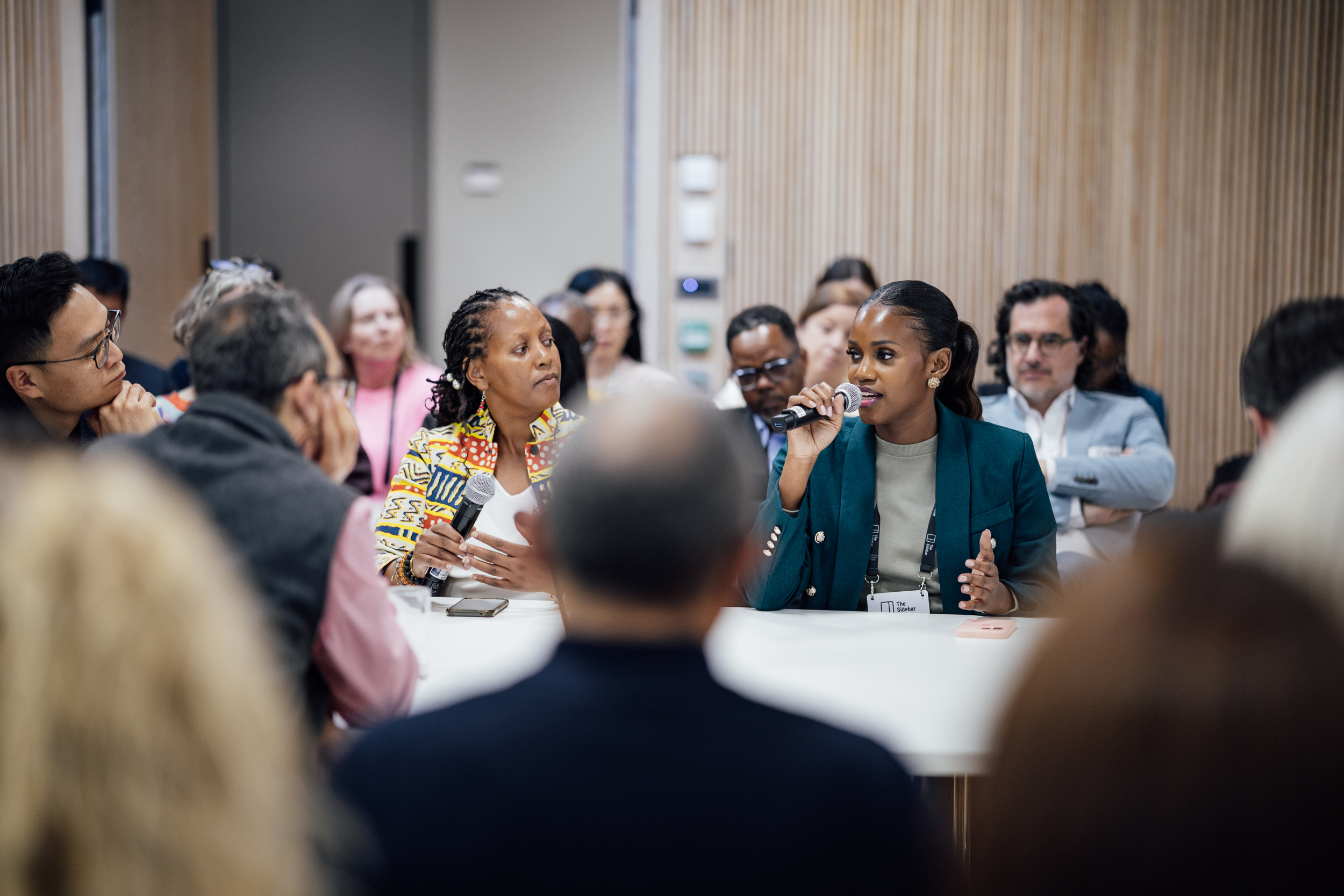
To challenge traditional hierarchies and disrupt assumptions about expertise, the session adopted a Long Table format. Originally developed in New York’s performing arts community, the design removes the physical and symbolic divide between speakers and audience. Sixteen seats formed a shared table, with participants rotating in and out as and when they wanted, ensuring that every voice could enter the discussion on equal footing.

Mapping a New Educational Paradigm


As the discussion unfolded, several core elements of a redesigned educational architecture emerged.

From sorting to capability building. Legacy education systems were designed to sort learners into social roles and labor markets, often along lines of gender, class, or geography. The emerging paradigm moves away from sorting and toward building human capabilities that remain relevant in uncertain futures.

The OECD’s recent work around education and human flourishing is a good example of what this can look like.

Ending linear learning models. Systems that label most learners as failures early in life are untenable. Participants emphasized the need to move decisively away from linear, age‑locked progressions that narrow opportunity rather than expand it.

Self‑leadership as a core capability. Education has long focused on preparing students to lead systems and organisations. Yet in a volatile world, one of the most critical skills is the ability to lead oneself—to navigate ambiguity, complexity, and change without relying on predetermined pathways.

Practice over memorization. Instructional models must shift from abstract content absorption to practical application. In STEM education, for instance, this means engaging students in real‑world problem‑solving—designing school gardens or water systems—rather than limiting learning to theory alone.

Agency, belonging, and competence. Unlocking human potential requires three conditions working together: agency to make choices, belonging to feel safe within community, and competence to act effectively in the world. Participants pointed to early‑childhood educators already modeling this approach by designing learning environments without rigid, top‑down blueprints.
Human Connection as Core Infrastructure


A recurring conclusion was that human connection is not a “soft” add‑on—it is foundational infrastructure. Without relationships and a sense of belonging, learners struggle to develop purpose or future‑ready skills.

Social and emotional learning was framed as a structural necessity, particularly in light of rising mental health challenges, suicide, and gender‑based violence. Many different organization’s growing recognition of psychosocial support as integral to education reinforces this shift.

Participants also reflected on how many traditional school models prioritize discipline, control, and cultural assimilation—echoing colonial power structures. A new pedagogy must move away from competition and compliance toward connection, collaboration, and shared meaning‑making.

Decentralization and Co‑Design


Redefining the purpose of education cannot be left solely to formal education systems. Meaningful redesign requires broader participation.

Cross‑sector integration. Challenges affecting students—such as physical safety, water access, or health—are often shaped by systems outside education. Health, water, and security actors must therefore be involved in educational design, with success measured against improvements in community wellbeing.

Communities as educators. At its core, education is the transmission of knowledge, skills, and values across generations. This work already happens beyond classrooms, through parents, tradespeople, elders, and community leaders.

Protecting mother tongues. Current systems often devalue local languages in favor of English, unintentionally discouraging families from passing on linguistic and cultural heritage. Reframing value is essential for cultural continuity.

Students as co‑designers. Young people are too often treated as passive recipients. Participants argued that educational purpose must be co‑created with learners themselves, recognizing children as equal contributors rather than subjects of reform.

Navigating Technological Acceleration


Artificial intelligence surfaced as both a challenge and a lever. With knowledge now instantly accessible, education’s purpose shifts away from information mastery toward distinctly human capacities.

Learners must develop the ability to connect emotional, contextual, and ethical dimensions—areas where machines remain limited. The technology sector itself increasingly values emotional intelligence as critical for navigating complex hierarchies and collaborative work.

At the same time, current AI models reflect narrow data realities and do not capture the diversity of global classrooms. Learners and educators need the skills not only to use AI responsibly, but to help shape its future development.

The same tension appears in space and climate technologies. While satellites already generate over half the data needed for climate mitigation, investment must ensure that communities most affected are able to interpret and act on this information, rather than remaining downstream consumers.

Engaging Power and Moving Systems


An AI‑generated synthesis at the end of the session highlighted an important gap: power dynamics. Accelerating change requires more than ideas—it demands strategies to engage and disrupt entrenched structures.

Participants pointed to key systemic barriers, including governments incentivized toward short‑term efficiency, rigid teacher‑training institutions, and unions shaped by legacy systems. Reform focused narrowly on labor‑market alignment risks entrenching the very inequities education should challenge.

Transformation requires changing what counts as evidence—placing lived experience alongside curriculum metrics—and loosening constraints imposed by funding structures.

Ultimately, wide‑scale change demands political prioritization. Making education a central election issue has historically been one of the few mechanisms capable of forcing national‑level reform. 

The session closed with a pressing question: who actually has the power to move systems, and what would it take for them to act?  Ultimately, it felt, at least for participants in this edition of Education House, that there is a fairly clear consensus on what the purpose of education needs to be at this point in history – the conversations now need to move on to shifting systems to realise that purpose.


Founding Partners
Cookie preferences

Education House uses cookies to enhance your experience, personalize content, and analyze web traffic. By clicking Accept Essential Cookies, you agree to the use only essential cookies.

For more details, please review our Privacy Policy.

Accept Essential Cookies