Education House
Events UNGA 81 Articles
Log in
menu
Frontpage Events UNGA 81 Articles

Education House UNGA 81: Call for Proposals Process and Insights

Article • 13 Aug 2026
UNGA 81

How was the final agenda created and what have the proposals shown as priorities for the global education community?

The Call for Proposals for Education House @ UNGA 81 received a sixfold increase from the inaugural UNGA 80 edition, with 120 proposals from over 200 organizations across the global, regional and local education ecosystems, reflecting a broad range of perspectives, partnerships, and areas of work.

Education House @ UNGA 81 has two questions at its core:

  • What needs to shift in education to embrace the purpose of developing students holistically to meet the interconnected challenges of our time, and how do we accelerate these shifts?

  • What needs to shift for education to be treated as a core strategic priority across sectors and as the foundation of human capability, economic resilience, and sustainable development, and how do we get there?

How the agenda was created

32 session proposals accounting for over 120 organizations were accepted. The following process was followed in coming to the final list of sessions:

Initial sift

Each session was analysed against the Call for Proposal guidance, taking into account:

  • Length of proposal: no more than 90 minutes

  • Collaborations: more than three organizations prioritised

  • Theme: sessions that discussed education as it relates to wider sustainable development prioritised

  • Stakeholders: those who brought in non-education focused stakeholders and elevated diverse voices were prioritised

  • Finance: willingness to financially contribute to the day.

  • Format: sessions that experimented with format werge prioritised

At this stage, single organisation proposals and those unable to offer financial contribution were removed from consideration. 

Review

  • Each proposal was reviewed by an individual reviewer who awarded a score out of 10

  • Each proposal was then reviewed again by a different reviewer who awarded a score out of 10, and provided questions on the first review score. 

  • All sessions that received a score above 15 were then discussed by the reviewing team across two calls.

  • The reviews were done blind of the number of volunteers and the financial contribution offered.

Creating the agenda

  • Where high scoring proposals were similar, proposers were asked to consider combining their sessions. Four of the final 32 sessions were combined efforts.

  • Six sessions were added to a waitlist and this was communicated to those session proposers.

  • Accepted session proposers were given a room and time, and given four working days to accept or decline their space and time.

  • All session proposers accepted their space and time by the deadline.

What is top of mind for the global education ecosystem?

The applications provided a unique insight into f the issues and priorities being prioritised by the global education community, with constellations of partners and themes that showed a sector brimming with ideas, energy and determination to transform the world through education. 

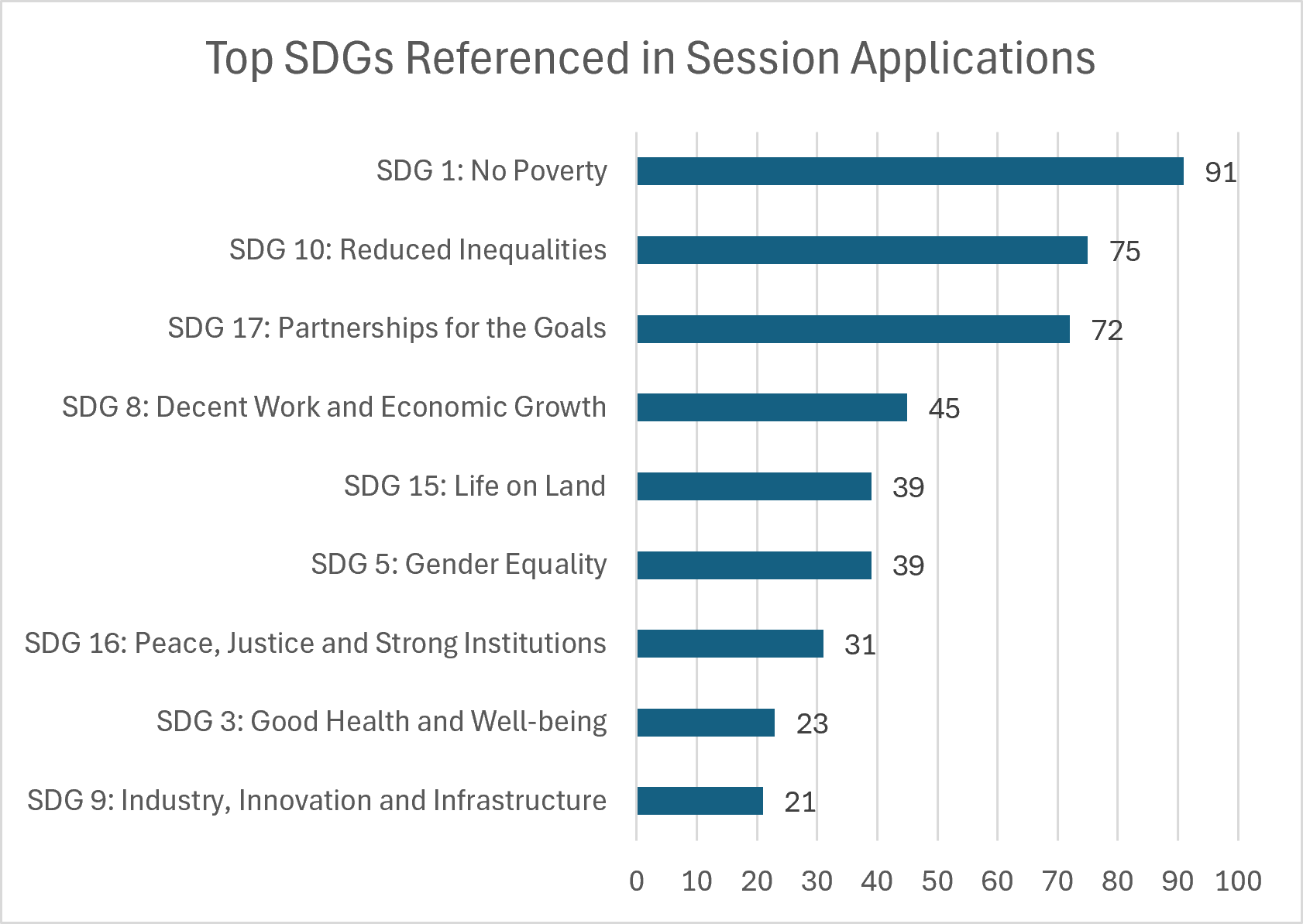
Which Sustainable Development Goals showed up the most?

Other than SDG 4 (Quality Education), SDG 1 (No Poverty) was the most frequently referenced goal, followed by SDG 10 (Reduced Inequalities), SDG 17 (Partnerships for the Goals) and SDG8 (Decent Work and Economic Growth). The distribution suggests that applicants largely positioned education not only as a goal in itself, but also as an enabler of progress across the broader 2030 Agenda.

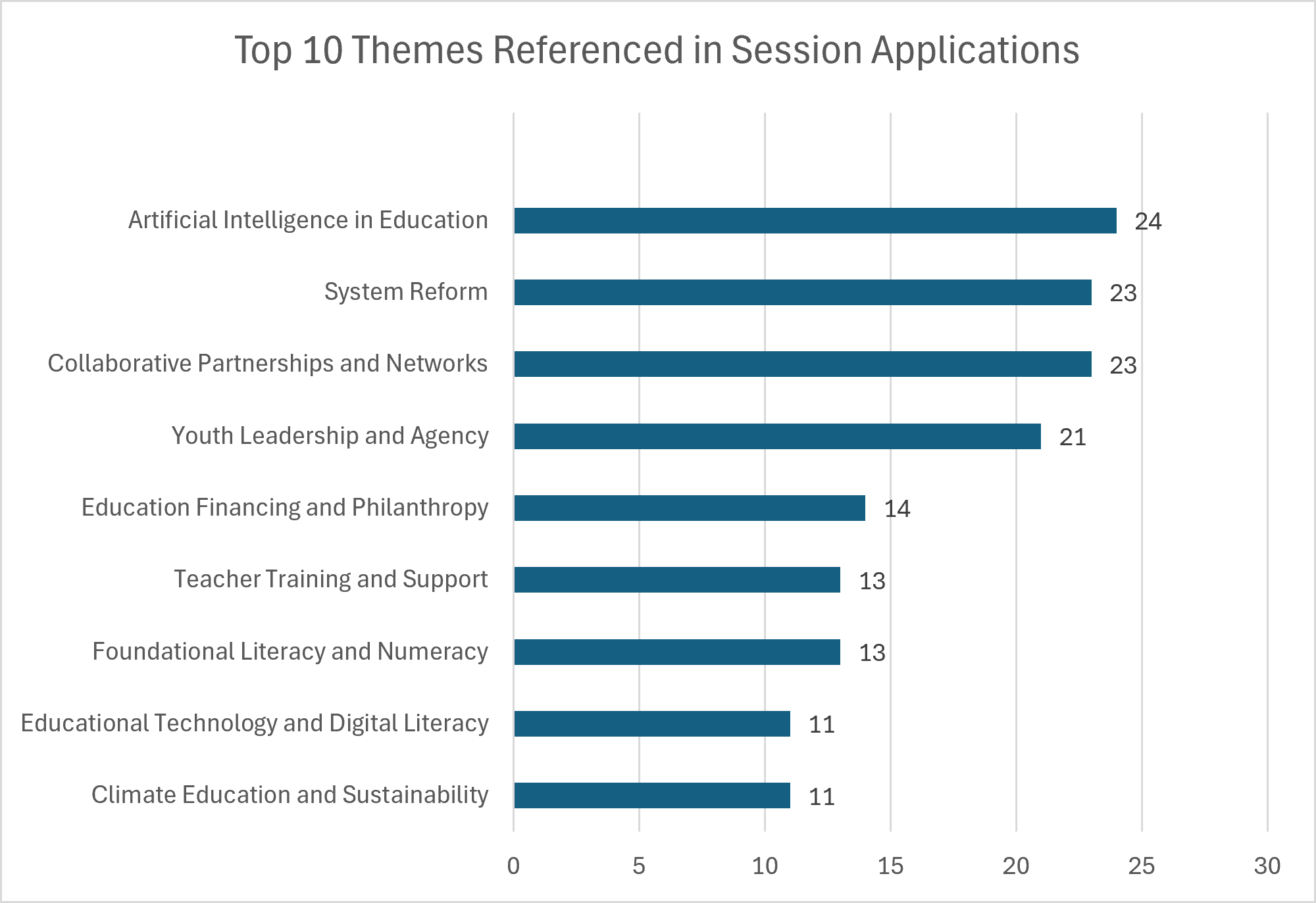
What are the common themes that organizations want to talk about?

Organizations identified a broad range of thematic areas. Artificial Intelligence in Education was the most frequently selected theme, followed by Collaborative Partnerships and Networks and System Reform, and Youth Leadership and Agency. Other commonly selected themes included education financing, foundational learning, teacher development, climate education, digital literacy, and community-led learning ecosystems.

Looking Ahead

  • 13 August: Agenda for Education House @ UNGA 81 goes live.

  • 20 August: Public registration for individual sessions opens.

  • 18 September: Registration closes.

  • 22 September: Education House UNGA 81 takes place at 25 Broadway, New York.

Registration Guidance

  • You must be registered for an Education House user account to register.
  • Each session organiser is in charge of the registration approach for their session.
  • Some sessions will be open to register and others will be invite-only. This is at session organiser discretion.
  • Once a session is full, it will automatically show as 'waitlist'. You are encouraged to join the waitlist in case a space becomes free.
Founding Partners
Cookie preferences

Education House uses cookies to enhance your experience, personalize content, and analyze web traffic. By clicking Accept Essential Cookies, you agree to the use only essential cookies.

For more details, please review our Privacy Policy.

Accept Essential Cookies